Load-shedding filled South African businesses with lithium batteries: inverter and solar banks, UPS units in server rooms, forklifts, power tools and e-bikes charging in the corner. Most of them will never cause a problem. But when one does, a lithium battery fire behaves unlike any fire your extinguisher was designed for. This guide explains which lithium battery fire extinguisher, if any, actually works, how to put out a battery fire safely, and why catching it early matters more than anything you keep on the wall.
- No portable extinguisher reliably stops thermal runaway. Water cools burning cells best. CO2 and powder only knock down the flames.
- Lithium fire extinguishers, using gel or AVD, suit small devices. Most of their evidence comes from the makers, and there is no recognised Class L rating yet.
- For battery banks, e-bikes and UPS units, get everyone out and call the fire service.
- Early detection is where you win. Off-gas detectors gave 5 to 20 minutes’ warning in FM tests.
Where lithium batteries hide in your business
Lithium-ion batteries now sit in inverters, solar systems, UPS units, forklifts and cordless tools. Staff also charge laptops, e-bikes and scooters at work. The biggest risks are large battery banks and anything being charged.
Charging is the moment to watch. The London Fire Brigade says most e-bike and e-scooter fires start while the battery is charging, and it attended a record 206 of them in 2025. Battery failures, conversion kits and the wrong charger are the usual causes.
We check inverter, solar and UPS battery areas on site, free.
What is thermal runaway in a lithium-ion battery?
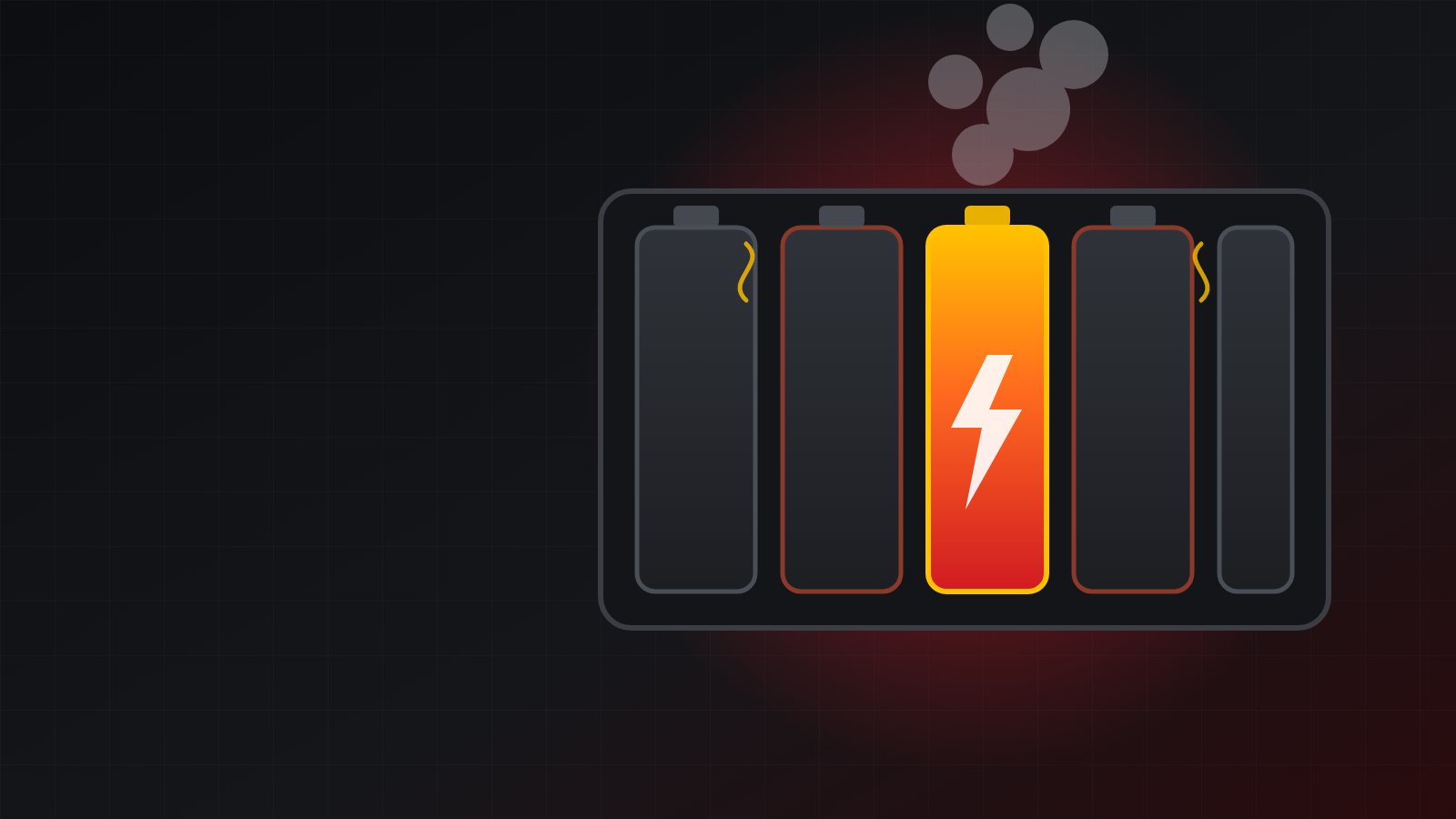
Thermal runaway is a chain reaction inside a damaged or overheated cell. The cell heats itself by more than 20°C a minute, passing 300°C, and vents flammable, toxic gas. Once it starts it cannot be stopped, and the heat can set off the cells next to it.
A lithium battery does not need oxygen from the room to keep reacting, which is why it is so hard to put out. It usually unfolds in five stages. Watch them below.
How a battery fire unfolds
Five stages, from a damaged cell to a fire that spreads. Press replay to watch again.
Two things make these fires dangerous for a business.
A battery that is only smoking is already a hazard. In one South African case reported by the Electrical Contractors’ Association, an electrician was critically injured by gas from a repaired battery that vented on site.
Sometimes hours later. Do not move it or go back in to check. Let the fire service declare it safe.
Which fire extinguisher works on a lithium battery fire?
No portable extinguisher reliably stops thermal runaway. Water cools burning cells best. CO2 and dry powder can knock down flames on a small fire but do almost nothing to cool the cells. Specialist lithium fire extinguishers, using gel or AVD, look promising, but most of the evidence comes from their makers.
French state research body Ineris compared extinguishing agents on lithium-ion cells in 2024. Here is what the independent evidence says, with the makers’ own claims marked separately. For how the ordinary types compare on other fires, see our guides to fire extinguisher types and CO2 vs powder vs foam.
| Agent | Knocks down flames | Cools the cells | Stops re-ignition |
|---|---|---|---|
| CO2 | Small fires | Poor | Poor |
| Dry powder | Small fires | Poor | Poor |
| Foam | Partial | Partial | Partial |
| Water | Good | Best | Needs a lot |
| Water mist | Partial | Contested | Partial |
| AVD | Maker: good | Cells yes, packs less | Good on cells |
| Lithium gel | Maker: good | Maker: good | Maker: good |
Ratings from Ineris (2024), the US FAA and the US Emergency Response Guide. Grey “Maker” ratings are manufacturer claims that have not been independently confirmed at pack scale.
What about “Class L” extinguishers?
In January 2026 the international fire classification standard, ISO 3941, was updated. Industry reports say it now adds a Class L for lithium-ion battery fires to the familiar classes of fire. But there is still no recognised extinguisher rating for Class L. The European test for it is only a draft. The test most products quote is the Dutch NTA 8133, which covers batteries of up to 600 Wh. For scale, that is far smaller than a typical inverter battery of several kilowatt-hours.
The lithium extinguisher test vs an inverter battery
Stored energy, drawn to scale. The 5 kWh battery is an example size.
So treat any “lithium extinguisher” as a tool for small devices, such as a laptop, a tool battery or a scooter, used by someone trained. It is not protection for a battery room. For anything bigger, the official advice from fire services is simple: get everyone out and call the fire service.
Do lithium-ion fire extinguishers work?
A lithium-ion fire extinguisher can help on a small device, used early by someone trained. It will not make a battery room safe. If you are comparing fire extinguishers for lithium batteries, ask these five questions first.
- Which test does it claim?
Most quote the Dutch NTA 8133 test, which covers batteries of up to 600 Wh. Ask for the test report, not just a logo.
- Who did the testing?
Look for an independent test laboratory. Results that appear only on the maker’s own website are claims, not proof.
- What size of battery does it suit?
A typical inverter battery holds several kilowatt-hours. That is many times the battery size in the test.
- What is the agent?
Water-based gels and AVD aim to cool the cells. CO2 and powder do not cool them.
- How is it serviced?
Ask how often it needs a service, and who in your area can do it. An extinguisher that is never checked is a guess.
Be careful with labels such as “SABS-approved” or “Class L rated”. South African suppliers make conflicting statements about approval, and no recognised Class L extinguisher rating exists yet.
We review extinguisher types and placement on site and service them to SANS 1475.
How to put out a lithium battery fire safely
For anything bigger than a phone or laptop, do not fight it. Get everyone out, raise the alarm and call the fire service. Only tackle a small device if you are trained, it is safe and you have a clear exit behind you. Then cool it with plenty of water.
What you do in the first minute depends on the size of the battery. Use the guide below, and put it on the wall where batteries charge.
Battery overheating or smoking? What to do
Small device or big battery: two very different answers. Press replay to watch again.
- Spot the warning signs
A battery that is very hot, swollen, leaking, hissing or giving off a strong chemical smell is failing. If it is safe to do so, switch it off and unplug it.
- Get everyone out and raise the alarm
Once it smokes or burns, the gas is toxic and flammable, and the fire can spread fast. Close the door behind you if you can.
- Call the fire service
In Cape Town, dial 107 from a landline or 021 480 7700 from a cellphone. Tell them a lithium battery is involved.
- Only tackle a small device if you are trained
Keep a clear way out behind you. Knock down the flames, then cool the device with plenty of water, as the US FAA advises.
- Expect it to reignite
Do not move it or go back in to check. A battery that looks out can flare up again later, so let the fire service declare it safe.
Early detection: the minutes before a battery fire
A failing cell vents gas before it catches fire. In FM tests, off-gas detectors gave 5 to 20 minutes’ warning before thermal runaway, and stopping the charge then prevented the fire. Smoke detection comes next, and heat detection comes last, once the fire has already started.
A fire you never have is better than any extinguisher.
In FM tests, stopping the charge when the off-gas detector alarmed prevented thermal runaway.This is where you can win. The chart shows the order in which each kind of detector sees a battery failure.
Which detector sees it first
Cell temperature over time during a battery failure. Illustrative shape, not measured data.
Senses the electrolyte vapour a cell releases before it fails. In 2025 FM Approvals approved its first lithium-ion off-gas detector.
Draws air samples through pipes to a very sensitive detector. Some systems are marketed to sense battery vapour as well. Read how aspirating smoke detection works.
Useful backup, but by the time it alarms, the cell is already in runaway.
Detection only helps if someone acts on it. Link it to your fire panel and alarm, and consider 24/7 fire panel monitoring so an alarm at night is seen at once. A gas suppression system can protect a server room and its equipment from fire. But FM notes that gaseous agents do not cool battery cells, so pair it with early detection. Our guide to gas suppression for server rooms explains how.
South African rules for solar and inverter battery installs
In Cape Town, solar and battery systems need a competent installer and a Certificate of Compliance. They must be registered with the City before installation and use a City-approved inverter. Insurers warn that a non-compliant installation can affect your cover.
- Every installCertificate of Compliance
The City of Cape Town requires a competent installer who provides a Certificate of Compliance. The system must also be registered with the City before installation.
- Since October 2023Approved inverters only
The City accepts only inverters on its approved list.
- January 2026, draftThe wiring code is changing
A new edition of SANS 10142-1 adds a test report for PV and battery generating plants.
- March 2026Insurers’ warning
The South African Insurance Association said owners are legally responsible for compliant installations, and that non-compliance can invalidate cover. Santam asks clients to hold a Certificate of Compliance.
Electrical compliance is your installer’s job. Fire protection around the battery area is ours. Ask both questions before you add more storage, because insurers look at both after a fire. Our guide to fire insurance claims in South Africa explains why.
Battery room fire safety checklist
Tick off what is already true for your site. Eight or more and you are in good shape. Fewer than eight, and a short site visit will show you where to start.
Is your battery area ready?
Gaps on your list? We check battery areas on site, free.
Book a free site checkBatteries and chargers should never sit in a passage or stairway that people need to escape. Our step-by-step guide to a fire evacuation plan shows how to keep escape routes clear and get everyone out.
What happens on a C4 battery-area check
We walk your battery and charging areas with you, check the fire risks, and give you clear written findings in order of priority. The check is free and there is no obligation.
- We walk the battery area with you
Inverter and solar banks, UPS cabinets, and the places where forklifts, tools, e-bikes and scooters charge.
- We check what could start or feed a fire
Charging habits, spacing, ventilation, heat and sun, and what is stored around the batteries.
- We review your detection and equipment
Whether smoke or early-warning detection covers the area, whether alarms reach someone, and which extinguishers are where. Our technicians service portable extinguishers to SANS 1475. See our fire extinguisher services.
- You get written findings, in order of risk
A short list of what to fix first. Electrical compliance stays with your registered installer, and a full fire risk assessment is available if you need one.
Lithium battery fire questions
What type of fire extinguisher is needed for lithium-ion batteries?
No extinguisher has a recognised Class L rating yet. For a small device, water cools burning cells best, and water-based lithium fire extinguishers using gel or AVD are designed for this, although most of their evidence comes from the makers. CO2 and dry powder may knock down flames but do not cool the cells. Battery banks need early detection and the fire service, not an extinguisher.
Will a fire extinguisher work on a lithium battery fire?
A CO2 or dry powder extinguisher may knock down the flames on a small device. But it does almost nothing to cool the cells, so the battery can reignite. Water cools best. For anything larger than a small device, get everyone out and call the fire service.
Is there a Class L fire extinguisher in South Africa?
Class L was added to the international fire classification standard, ISO 3941, in January 2026, according to industry reports. There is still no recognised extinguisher rating for Class L, and the European test for it is only a draft. Most lithium extinguishers quote the Dutch NTA 8133 test, which covers batteries of up to 600 Wh.
Can you use water on a lithium-ion battery fire?
Yes. Water is the best agent for cooling burning lithium-ion cells, according to research by the French institute Ineris and guidance from the US FAA. The warning against water applies to lithium metal, which is a different fire class. Keep clear of live electrical equipment and leave large battery fires to the fire service.
Will a fire blanket stop a lithium battery fire?
Not reliably. An ordinary fire blanket is not designed for it. Purpose-made lithium fire blankets aim to contain the fire and limit its spread, not to put it out, and flammable gas can build up underneath. One maker tells users to leave the area straight after putting one down. Treat a blanket as containment only, and still call the fire service.
What should we do if a battery starts smoking?
Do not try to move it or fight it if it is large. Get everyone out, close the door if it is safe to do so, and call the fire service. The gas a failing battery releases is flammable and toxic.
How can we detect a lithium battery problem early?
A failing cell vents gas before it catches fire. Off-gas detectors gave 5 to 20 minutes’ warning before thermal runaway in FM tests. Aspirating smoke detection also gives early warning, while heat detection only alarms once the fire has started. Link any detection to your fire alarm so someone acts on it.
Still have a question? WhatsApp us or call 021 863 0040.
Book a free site check with C4 Fire & Security. We look at your battery area, your detection and your escape routes.
- Inverter, solar and UPS battery areas checked on site
- Early-warning detection options explained
- Clear written findings you can act on
Sources and further reading (20)
- UL Research Institutes, What Is Thermal Runaway? ul.org
- FM, What businesses should know about lithium-ion off-gas detection, 15 August 2025. fm.com
- Energy-Storage.news, Stopping thermal runaway six minutes before it starts (DNV study). energy-storage.news
- FM Global Data Sheet 5-33, Lithium-Ion Battery Energy Storage Systems, January 2024. PDF
- Ineris, Summary of work on extinguishing Li-ion battery fires of electric vehicles, 25 September 2024. ineris.fr
- NTSB, Safety Risks to Emergency Responders from Lithium-Ion Battery Fires in Electric Vehicles (SR-20/01), 2021. ntsb.gov
- US FAA, Extinguishment of Lithium-Ion and Lithium-Metal Battery Fires (DOT/FAA/TC-13/53). faa.gov
- ISO 3941:2026, Classification of fires. iso.org
- Kiwa, NTA 8133 tests lithium fire extinguishers. kiwa.com
- London Fire Brigade, Record number of e-bike and e-scooter fires across London in 2025, January 2026. london-fire.gov.uk
- London Fire Brigade, Spot the warning signs: could your e-bike or e-scooter start a fire? london-fire.gov.uk
- National Fire Chiefs Council (UK), E-bikes and e-scooters fire safety guidance. nationalfirechiefs.org.uk
- Performance-focused analysis of fire-blocking blanket for lithium-ion battery fires, Fire Technology, 2023. springer.com
- New Pig, Lithium Battery Fire Blanket instructions (manufacturer). PDF
- City of Cape Town, Contact us: emergency numbers. capetown.gov.za
- City of Cape Town, City’s Fire Service pivots to address new fire risks, 5 July 2023. capetown.gov.za
- Santam, The impact of solar installations. santam.co.za
- South African Insurance Association, Safe Solar, Secure Homes, 31 March 2026. saia.co.za
- Electrical Contractors’ Association (SA), The Unseen Risks of Lithium Batteries. ecasa.co.za
- SANS 10142-1 Edition 3.3, draft South African Standard, January 2026.
This article is general fire safety guidance, not a substitute for a site-specific risk assessment or the advice of a registered electrical installer. Product claims are attributed to their manufacturers.