
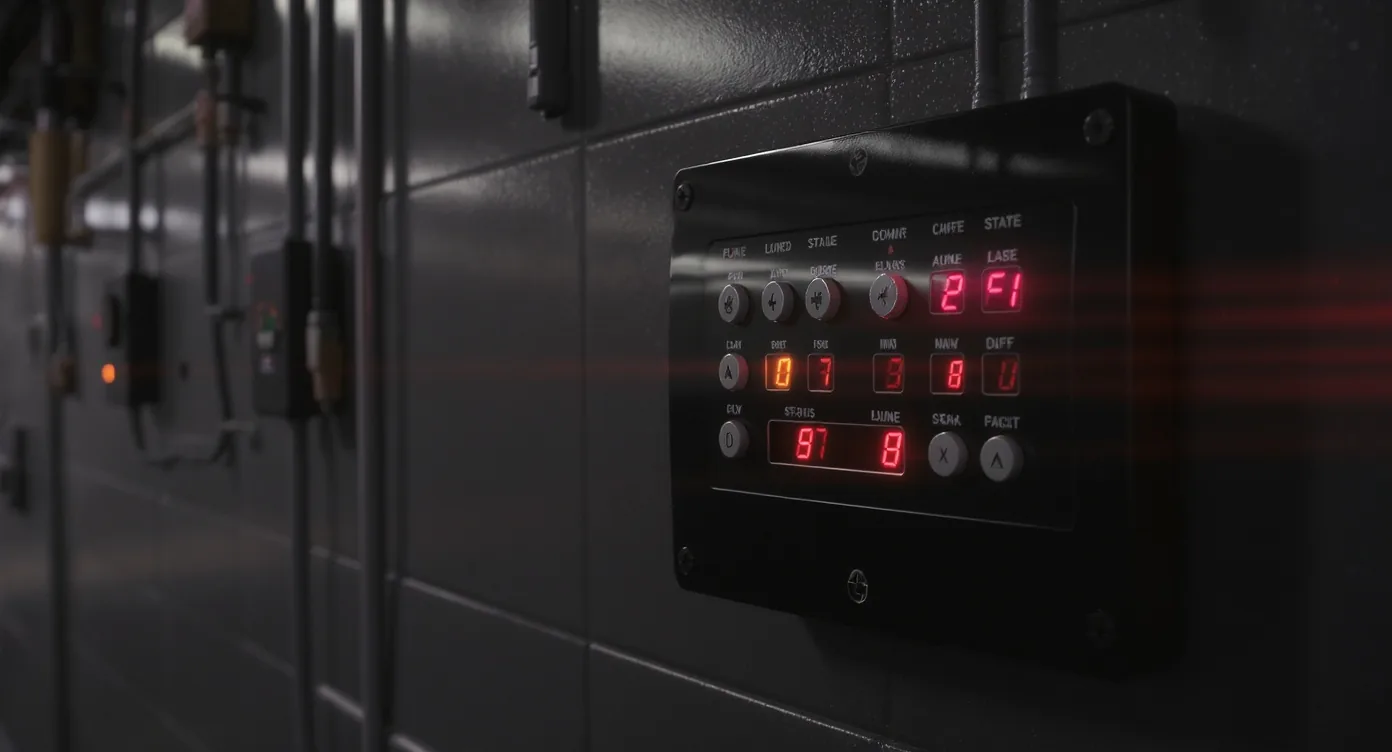
A fire detection system is the difference between a contained incident and a total loss. For a commercial or industrial building in the Western Cape, it is also a legal and insurance requirement, not an optional extra. Yet the choices are genuinely confusing: conventional or addressable, which detectors, which standard, and how much it should cost. This guide breaks the decision down the way an engineer would, so you can specify the right system for your building with confidence.
What a fire detection and alarm system actually does
A fire detection and alarm system senses the earliest signs of a fire, smoke, heat or flame, then automatically raises the alarm so people can evacuate and responders can act. At its core sit three parts: the detectors, a control panel that makes the decisions, and the alarm and monitoring outputs it triggers.
Every commercial fire detection system, no matter the size, follows the same logic: sense, decide, respond. Detectors placed throughout the building watch for smoke, heat or flame and feed signals to a central fire alarm control panel. The panel interprets those signals, activates sounders and beacons, releases magnetic door holders, and can notify an off-site monitoring station. In South Africa this whole chain is governed by SANS 10139, the standard for the planning, design, installation, commissioning and servicing of fire detection and alarm systems in buildings, which is based on the British standard BS 5839-1. C4 Fire & Security designs to SANS 10139 across the Western Cape, from single-panel retail units in Cape Town to multi-zone factories in the Cape Winelands, because a system that is not designed to the standard is difficult to certify and easy for an insurer to question.
Addressable vs conventional fire alarm systems
A conventional fire alarm system tells you which zone a fire is in; an addressable system tells you exactly which device. Conventional suits small, simple buildings on a tighter budget. Addressable suits larger or complex sites where finding the precise location fast, and maintaining the system easily, matters more.
The single biggest choice you will make is conventional versus addressable, and it comes down to how precisely the system locates a fire. A conventional system divides the building into wired zones and tells the panel which zone triggered, so staff or responders still have to search that area. An addressable system gives every detector and call point a unique digital address, so the panel names the exact device that activated. That precision cuts response time, simplifies fault-finding, and scales cleanly as a building grows, which is why C4 Fire & Security specifies addressable systems for most commercial and industrial sites across the Western Cape while keeping conventional as the cost-effective answer for smaller premises. The table below sets the two side by side.
| Feature | Conventional | Addressable |
|---|---|---|
| Locates a fire by | Zone (an area of the building) | Exact device that activated |
| Fault finding | Zone level, more searching | Device level, pinpointed |
| Best-fit building | Small, simple layouts | Medium to large, complex or multi-storey |
| Scalability | Limited, more cabling to expand | High, add devices to the loop |
| Upfront cost | Lower | Higher, with lower running cost |
| Typical use | Small retail, offices, workshops | Warehouses, estates, hospitals, data centres |
Types of fire detectors and where each belongs
There is no single best detector, only the right detector for the space. Optical smoke detectors suit clean areas, heat detectors suit kitchens and dusty plant, flame detectors suit fuel stores, and aspirating detection gives the earliest possible warning in high-value spaces like data centres and cold storage.
Matching the detector to the environment is what separates a reliable system from one plagued by false alarms. Put an optical smoke detector in a dusty warehouse and it will nuisance-trip; put a heat detector in a data centre and it will warn far too late. A well-designed SANS 10139 system mixes detector types to suit each area, and for the highest-risk spaces it uses aspirating smoke detection, which draws air through a network of pipes and samples it continuously, catching a fire at the invisible, smouldering stage long before flames appear. C4 Fire & Security uses aspirating detection, including VESDA, where early warning protects irreplaceable assets, and our aspirating installations are engineered for a lower total cost of ownership, up to 37% lower, over the life of the system. The table shows how the common detector types map to real Western Cape spaces.
| Detector | How it senses fire | Best suited to |
|---|---|---|
| Optical smoke | Light scattered by smoke particles | Offices, retail, corridors, general areas |
| Heat | A set temperature or fast rate of rise | Kitchens, plant rooms, dusty or steamy areas |
| Flame | Ultraviolet or infrared light from flames | Fuel stores, workshops, high-ceiling spaces |
| Multi-sensor | Smoke and heat combined, fewer false alarms | Hotels, mixed-use, sensitive offices |
| Aspirating (VESDA) | Air drawn through pipes and sampled, pre-visible | Data centres, cold storage, archives, switchrooms |
| Beam | An optical beam across a large open volume | Warehouses, halls, atria, high roofs |
What SANS 10139 and SANS 10400-T require in the Western Cape
Two standards frame the rules. SANS 10139 covers how a fire detection and alarm system must be designed, installed and serviced. SANS 10400-T, part of the National Building Regulations, sets when your building needs detection at all, based on its size and use. Meeting both is what keeps you legal and insured.
Compliance is not a single certificate, it is a chain, and detection sits near the top of it. SANS 10139 requires that a system be planned, installed, commissioned and, crucially, maintained to standard, with a certified technician servicing the system twice a year and every activation recorded in a logbook. SANS 10400-T, the fire-safety part of the National Building Regulations published through the South African Bureau of Standards, then determines the level of protection your occupancy demands. Falling short on either can void an insurance claim, a risk we cover in our SANS 10400-T compliance guide. C4 Fire & Security audits Western Cape sites against both standards, from Somerset West to Worcester, so nothing is left for an assessor or insurer to challenge. Use this checklist to sense-check where your building stands today.
- Designed to SANS 10139Zoning, detector selection and cause-and-effect done to standard.
- Meets SANS 10400-TDetection level matched to your occupancy and building size.
- Serviced twice a yearBi-annual service by a certified technician, per SANS 10139.
- Coverage matched to useThe right detector type in every area, no blind spots.
- Panel is monitoredSomeone is alerted when the panel activates after hours.
- Records keptA logbook of tests and events your insurer can inspect.
How to choose the right fire detection system for your building
Start with the building, not the product. The right system follows from your building’s size, layout, risk and the value of what is inside it. A small office needs far less than a data centre or a wine cellar. Match the approach to the space, then let a specialist confirm the detail against SANS 10139.
The most expensive system is not automatically the safest; the safest is the one designed around your actual risk. A small Cape Town office is well served by a conventional zoned system, while a multi-storey building or a warehouse needs the precision of an addressable network, often blended with beam or heat detection. High-value and unmanned spaces, server rooms, cold stores and archives, justify aspirating detection and frequently a linked suppression system. C4 Fire & Security starts every specification with a free fire risk assessment, then designs to fit, which avoids both under-protecting a critical asset and over-spending on a simple one. The table below is a starting point, not a substitute for that assessment.
| Building type | A sensible starting point |
|---|---|
| Small office or retail | Conventional zoned detection and alarm |
| Multi-storey or mixed-use | Addressable system for device-level location |
| Warehouse or factory | Addressable, with beam or heat in open and dusty areas |
| Cold storage | Aspirating detection that works at low temperatures |
| Data centre or server room | Aspirating detection with linked gas suppression |
| Wine estate or cellar | Addressable, with heat or aspirating in production areas |
For the data centre and server-room case in particular, detection is only half the answer; the other half is putting the fire out without water. We cover that in our guides to aspirating smoke detection and gas suppression for server rooms and data centres.
Not sure which system your building needs?
Book a free fire risk assessment. A C4 specialist will walk your site, measure it against SANS 10139 and SANS 10400-T, and recommend the right detection for your risk. No obligation.
Choosing a system is not the same as installing one
This guide compares the technologies. Specifying and installing the system is a separate exercise that depends on the building rather than the detector: zoning, cause-and-effect, device placement and the commissioning evidence an insurer or municipal inspector will ask for.
Once you have settled on addressable, conventional or aspirating detection, the next question is who designs and installs it. That work is scoped per building, not per technology, which is why it lives on its own page. See how C4 approaches commercial fire alarm installation, including the survey, the design, the commissioning evidence and the handover pack.
The short version: a system is proven at commissioning, when the full cause-and-effect is tested end to end, and it stays compliant afterwards through bi-annual servicing and a current logbook. C4 handles SANS 10139 design and installation from its base in Simondium, out across the Cape Winelands and the greater Western Cape, and offers 24/7 fire panel monitoring from R495 a month so a real person responds the instant a panel activates. Read how that works in our guide to 24/7 fire panel monitoring.
Fire detection systems, frequently asked questions
How much does a commercial fire detection system cost in South Africa?
There is no single price, because cost depends on the building’s size, the number of detectors, whether the system is conventional or addressable, and the detector types your risk calls for. A small conventional system costs a fraction of an addressable network with aspirating detection for a data centre. The honest answer is to have the site assessed first. C4 Fire & Security gives a free fire risk assessment and a costed proposal so you are comparing like for like, not guessing.
What is the difference between an addressable and a conventional fire alarm system?
A conventional system divides a building into zones and tells you which zone a fire is in, so someone still has to search that area. An addressable system gives every detector a unique address and names the exact device that activated, which speeds up response and fault-finding. Conventional is cost-effective for small, simple buildings, while addressable is the better fit for larger, complex or multi-storey premises. C4 specifies whichever suits your building and budget.
How often must a fire detection system be serviced?
Under SANS 10139, a commercial fire detection and alarm system should be serviced twice a year by a certified technician, with every test and activation recorded in a logbook. Regular servicing keeps the system reliable, keeps you compliant, and protects your insurance position, because a lapsed service history is one of the first things an insurer checks after a fire. C4 Fire & Security handles bi-annual servicing for commercial and industrial sites across the Western Cape.
Do I legally need a fire detection system for my building?
Most commercial and industrial buildings in South Africa do. SANS 10400-T, the fire-safety part of the National Building Regulations, sets the requirement based on your building’s size, occupancy and use, and your insurer will expect a compliant system regardless. Rather than guess whether you qualify, have the building assessed. C4 Fire & Security measures your premises against SANS 10400-T and SANS 10139 and tells you exactly what is required.
What is aspirating (VESDA) detection and when do I need it?
Aspirating smoke detection draws air through a network of sampling pipes and analyses it continuously, so it can detect a fire at the invisible, smouldering stage, far earlier than a standard smoke detector. That head start is critical in high-value or unmanned spaces such as data centres, server rooms, cold storage and archives. C4 Fire & Security installs aspirating and VESDA systems where early warning protects irreplaceable assets, engineered for a lower total cost of ownership over the system’s life.
Protect what your fire detection system is watching
Add 24/7 fire panel monitoring from R495 a month, so an alarm at 2am reaches a real person, not an empty building.
This article is general fire-safety guidance, not a substitute for a site-specific fire risk assessment or professional engineering advice. SANS standards are referenced for context; always confirm the current published version and its application to your premises with a qualified professional. Figures are indicative.