Protect Your Kitchen Fast and Cleanly
Kitchen fires spread in seconds and commercial insurers demand wet chemical suppression. C4 Fire & Security designs and installs kitchen hood fire suppression systems for restaurants, hotels, hospitals and industrial canteens across the Western Cape.
Insurance Compliant
Commercial property insurers require wet chemical suppression over cooking equipment. Protect your kitchen and your policy.
Automatic Activation
The system detects dangerous temperatures and activates automatically, suppressing fire even when the kitchen is unattended.
Cooking Oil Specialist
Wet chemical agents are specifically designed for Class F fires (cooking oils and fats), the most common kitchen fire source.
Commercial Kitchen Hood Suppression
C4 Fire & Security installs wet chemical kitchen fire suppression systems that detect and suppress fires in extraction hoods, ducts, fryers and cooking surfaces. Our systems use potassium-based wet chemical agents that cool burning oil below its auto-ignition temperature and create a foam blanket that prevents re-ignition.
Get a Free Quote- Wet chemical agent for Class F fires
- Hood, duct and appliance protection
- Automatic and manual activation
- Gas and electrical fuel shutoff integration
- SANS 10139 compliant installation
- Minimal kitchen disruption during install
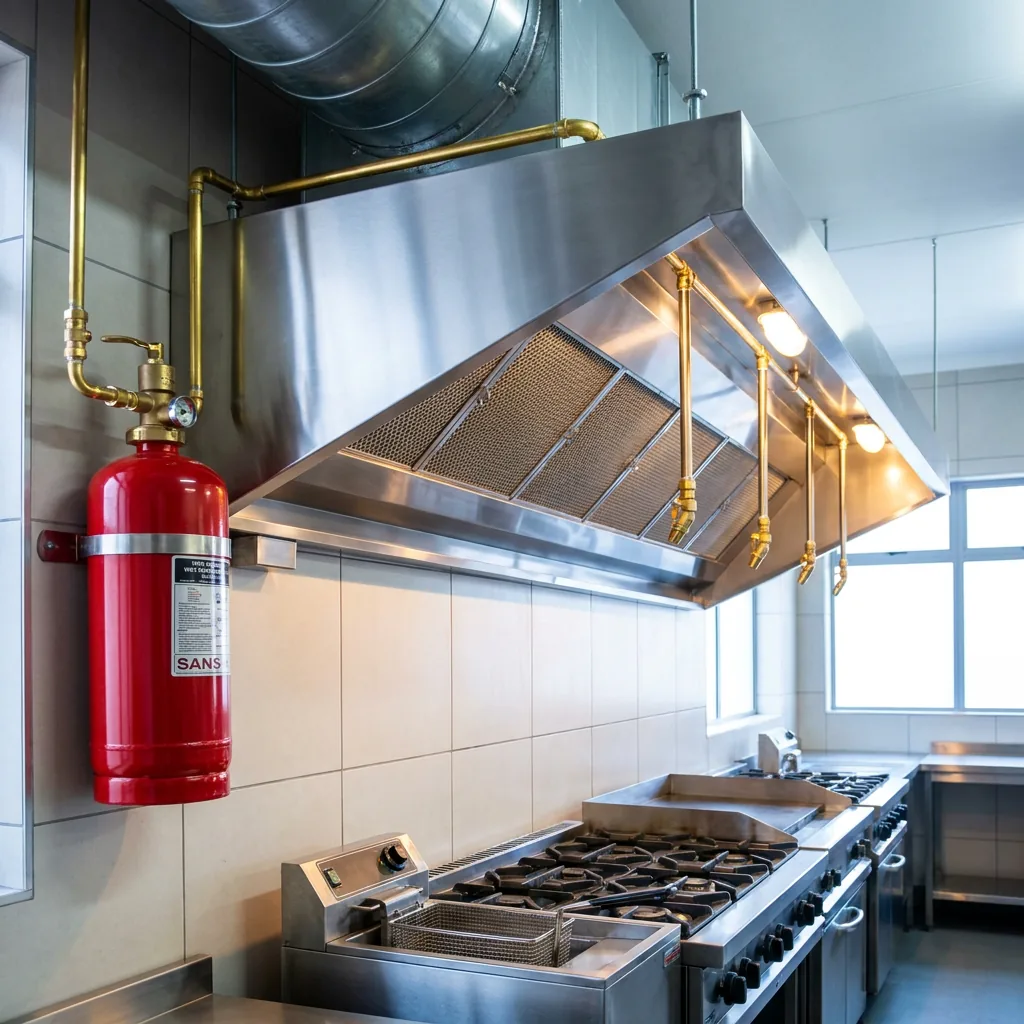
How we install a wet-chemical hood system
Stainless hood, red wet-chemical cylinder on the wall, brass discharge piping into the hood, and a 6L wet chemical extinguisher within 1 metre of the cooking line.
-
Hood system in a working commercial kitchen
-
6L wet chemical extinguisher
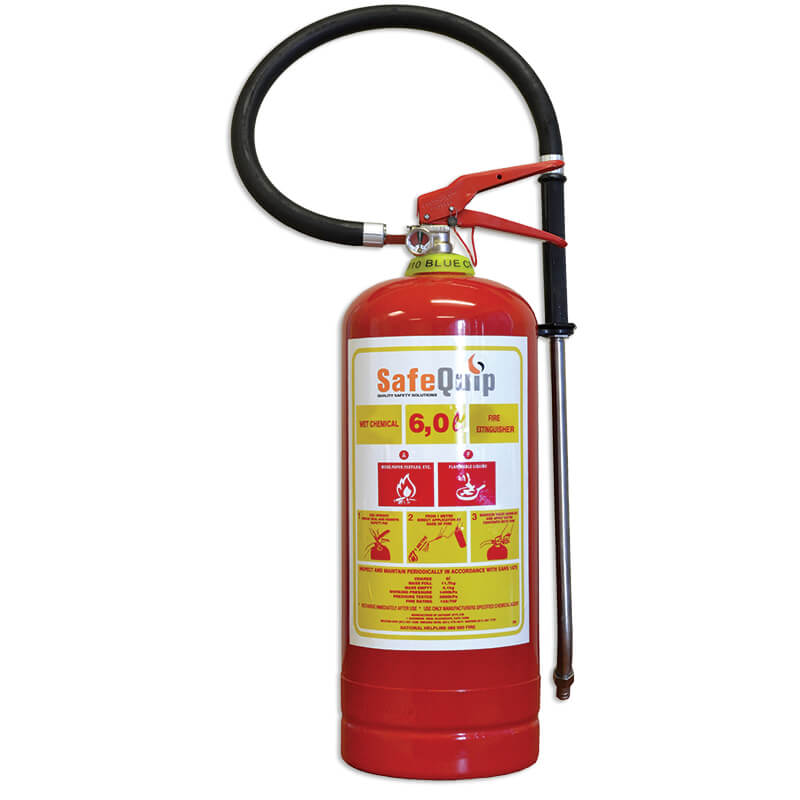
Product images courtesy of SafeQuip. C4 Fire & Security is an authorised SafeQuip installer. The scene image is an illustrative install reference.
How It Works
Kitchen Survey
We assess your cooking equipment layout, extraction system and fire risk profile.
System Design
We design nozzle placement to cover all cooking surfaces, hoods and ductwork.
Installation
Suppression cylinders, distribution piping, nozzles and detection installed with minimal kitchen downtime.
Testing & Training
Full system test, staff training on manual activation and emergency procedures.
Tap a card for the wet chemical detail
Commercial kitchen hood suppression follows a specific recipe of agent, nozzles and shutdowns. Tap any card for the detail.
-
Wet chemical chemistry
Potassium-based liquid that saponifies hot cooking oil into a soap film.
- Suppresses Class K (kitchen / cooking oil) fires
- Sprayed under low pressure as a fine mist
- Reacts with hot oil to form a foam blanket
- Cools the oil below auto-ignition temperature
- Standard for SANS 1850 and UL 300 hood systems
-
Hood / duct coverage
Every appliance, every plenum, every duct gets a nozzle.
- Fryer, range, char-broiler, salamander coverage
- Plenum and grease filter coverage
- Exhaust duct nozzles at every direction change
- Automatic gas / fuel shutoff on discharge
- Sized per appliance per SANS 1850
-
Nozzle placement
Nozzle aim and height determine whether the system works on the day.
- Nozzles aimed at the appliance hazard zone
- Height between nozzle and appliance verified
- Each nozzle calibrated per appliance type
- Filters and ducts each have their own dedicated nozzles
- Re-verified at every annual service
-
Fuel-shutoff link
Gas and electrical power must shut off the moment the system fires.
- Mechanical gas-valve trip linked to system actuator
- Electrical contactor trip for power-fed appliances
- Hood fan continues to evacuate smoke
- Make-up air shuts down to avoid fanning the fire
- Verified at every annual service
-
Inspection cadence
Wet chemical systems need a service every 6 months by law.
- 6-monthly service inspection
- Nozzle aim and cleanliness check
- Cylinder pressure and weight check
- Fusible-link replacement
- Compliance certificate issued each visit
Get Your Free Quote
Simondium, Western Cape, 7670
Office: Mon - Fri, 8:00 - 17:00
24/7 Emergency Callouts
Frequently Asked Questions
While building codes vary by municipality, most commercial property insurers in South Africa require wet chemical suppression over commercial cooking equipment as a condition of cover. Without it, fire claims can be rejected.
A typical commercial kitchen installation takes 1-3 days depending on the number of cooking stations and extraction hoods. We schedule work around your operating hours to minimise disruption.
The wet chemical agent cools burning oil and creates a foam blanket. The fuel shutoff triggers automatically. After activation, the system needs to be recharged and the kitchen cleaned before resuming operations. C4 provides fast recharge services.
Do Not Wait for a Kitchen Fire to Act
Get a free kitchen survey. C4 Fire & Security installs wet chemical suppression that meets insurance requirements and protects your people.